“Choosing the T-cell profession: the mechanisms within” Keynote Talk
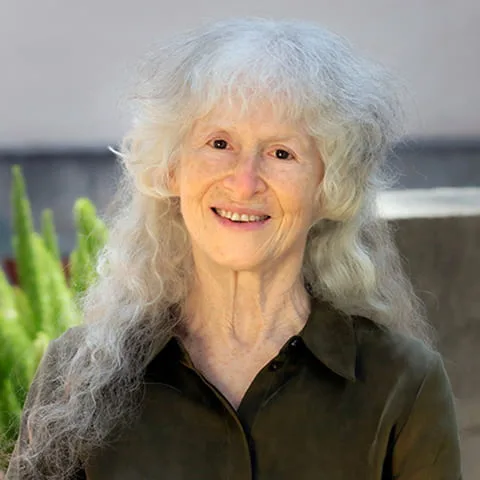
"Choosing the T-cell profession: the mechanisms within"
Dr. Ellen Rothenberg (Distinguished Professor of Biology, California Institute of Technology; A.D. White Professor-at-Large at Cornell)
Thursday, November 19, 2026
4:00pm ⋅ Lecture Hall 5, College of Veterinary Medicine
Open to all ⋅ Reception to follow in CVM Atrium.
An A.D. White Professors-at-Large Program keynote public talk. Cosponsored by the Dept. of Microbiology and Immunology and the Dept. of Molecular Biology and Genetics.
Abstract: This talk focuses on the way primitive blood cell precursors with both myeloid and lymphoid cell developmental potentials get transformed into committed precursors of T-cells. This occurs in the thymus, under the influence of strong signals from the microenvironment there. The availability of powerful in vitro culture systems to mimic the thymus have enabled studies leading to a deep molecular analysis of the underlying mechanisms. We track the chromatin epigenomic states, gene expression changes, and transcription factor activities through this process. The basis for these epigenome and transcriptional changes is the dynamic regulation of the T-cell and progenitor-cell transcription factors. The activity of these transcription factors can modify chromatin states, but we have found that the genomic sites where these factors work is sharply dependent on dose-dependent, combinatorial binding with partner factors. We have also found that T-cell development actually begins with a competition between two partially opposing gene network circuits that operate simultaneously within individual cell nuclei, a tug-of-war that is resolved only when the cells undergo commitment. Recent work sheds light on previously inaccessible events at the very onset of T-cell lineage specification.
Dr. Ellen Rothenberg is a Distinguished Professor of Biology at the California Institute of Technology and an internationally recognized molecular immunologist whose research explains how blood stem cells develop into T-cells of the immune system. Her work reveals how networks of genes, regulatory proteins, and cellular signals work together—often at the level of individual cells—to guide critical developmental decisions that shape immune function.
Rothenberg’s research has provided a unifying framework for understanding how cells make stable developmental choices within complex biological systems. By integrating molecular biology, genomics, and quantitative approaches, her work has revealed how timing, gene regulation, and cellular context shape immune cell identity. These insights have influenced thinking well beyond immunology, informing broader questions in developmental and systems biology. Full bio.
Quelle: events.cornell.edu
Mehr bei College of Veterinary Medicine at Cornell University
Alle Veranstaltungen bei College of Veterinary Medicine at Cornell University Monthly Sound Bath Meditation with the Let's Meditate Initiative
College of Veterinary Medicine at Cornell University · Ithaca
Kostenlos
 Seminars in Infection & Immunity (VETMI 7120) -- Dr. Kartik Chandran
College of Veterinary Medicine at Cornell University · Ithaca