COMMColloquium Series: Margaret E. Foster
Signs, Stock, and Staff: How Indie Bookstores and Social Reading Platforms Produce Queer Literary Counterpublics
Margaret E. Foster (Maggie), PhD Candidate, Cornell University
3 pm in 102 Mann
Reception to follow in the Hub
Brick-and-mortar independent bookstores have struggled against platformization and the rise of Amazon.com. Platformization affects not just book sales, but also community formation; historically, feminist bookstores provided sites for identity discovery and queer sociality, some of which has moved to digital platforms. Concurrently, recent political efforts have targeted LGBTQIA+ rights in the United States, including a growing number of bans on queer books. In this project, I draw on semi-structured interviews with 59 participants across three literary spaces: Two brick-and-mortar indie bookstores in the northeastern United States and one book club on the “social reading” app Fable. I supplement these interviews with discourse analysis and participant observation. I find that these literary spaces create opportunities for queer individuals to form networked counterpublics; however, they are challenged by political conditions, the need for profitability, and networked harassment campaigns, all of which are amplified by platform logics. Ultimately, this project contributes to literature examining the relationship between online and offline media consumption, networked publics, and feminist literary counterpublics. It also illuminates the stakes of forming and fortifying a “safe” queer space in a moment of rapid political, cultural, and economic change.
Margaret E. Foster (Maggie) is a PhD Candidate in Communication at Cornell University. She takes a critical-cultural approach to communication, using qualitative and participatory methods to explore how gender and sexuality are constructed in and through media, particularly how queer communities form in spaces organized around media consumption. Her research has been published in venues including Feminist Media Studies, Creator and Influencer Studies, and Lateral.
Événements à proximité
 Cornell Women's Soccer vs University of Pennsylvania - Fall Fest
Berman Field · Ithaca
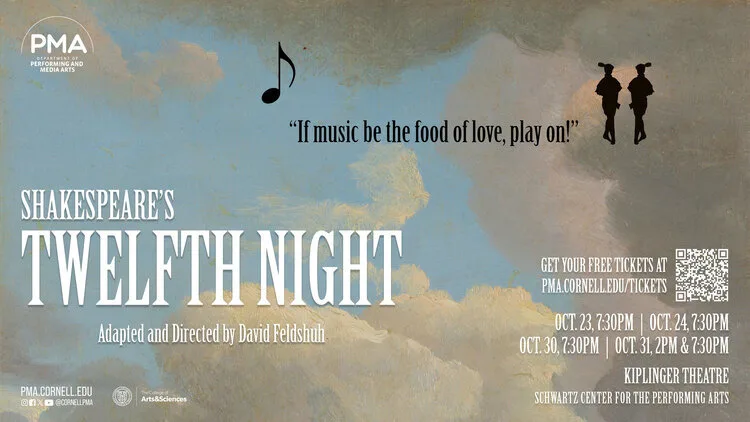 Shakespeare’s Twelfth Night: Mad Love, Mad Music
Schwartz Center for Performing Arts · Ithaca