Cornell Department of Astronomy & Space Sciences Fall 2026 Colloquium Series
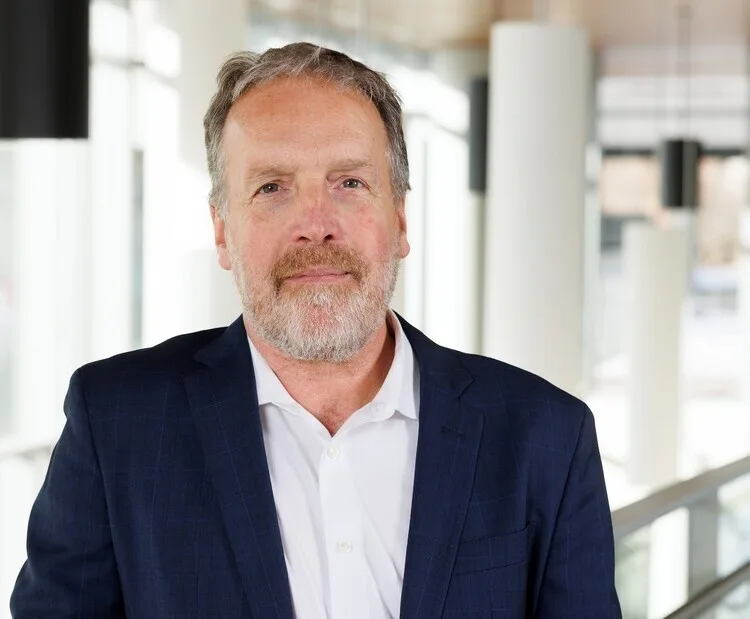
The William E. and Elva F. Gordon Distinguished Lectureship: Presented by Grant Wilson, University of Massachusetts at Amherst
Abstract:Very little comes easy in our Universe. While Hubble and JWST give us extraordinarily detailed views of stars and the interstellar medium, dust remains a confounding factor for much of what we want to learn. At millimeter wavelengths, the emission from that same dust becomes a tool for studying the processes it obscures. I will describe work we are doing to provide new views of star formation, galaxy evolution, and the assembly of galaxy clusters using TolTEC, a three-band continuum camera and polarimeter that couples large arrays of kinetic inductance detectors (KIDs) to the 50-meter Large Millimeter Telescope (LMT). Examples of deep and wide-field imaging and polarimetry will illustrate the scientific possibilities.
These ambitions come with exacting technical and engineering demands. In the spirit of Bill Gordon, I will discuss what it takes to make audacious projects like the LMT and CCAT work from a very human perspective. For the LMT, this includes measuring and controlling a large building sized reflector and operating thousands of superconducting detectors on a 15,000-foot mountain top in a developing nation. I will discuss our approaches to these challenges, including utilizing photogrammetry, out-of-focus holography, and infrared laser ranging. I will also look ahead to scientific opportunities for the LMT in the coming decade and draw connections to Cornell’s CCAT project through our shared technologies and complementary views of the millimeter sky.
My talk will begin and end with some thoughts for students, without whom none of this work would be possible. Taking on difficult projects requires a certain fearlessness, while making our new facilities useful requires relentlessness. These qualities deserve more explicit attention in the curriculum, both for their importance in research and for their value in industry careers. I will close with reflections and advice on working with AI: how it is changing what I am willing to attempt, and what this expanding set of tools might mean for those who are early (or late) in their scientific careers.
William E. Gordon, then professor of electrical engineering at Cornell, proposed the construction of the Arecibo telescope in 1958 to study the Earth's ionosphere via the incoherent scatter of powerful radio waves from the individual electrons in the ionospheric plasma. He also understood that the telescope would be able to make significant contributions to planetary science and the then relatively new field of radio astronomy. Gordon raised the funding for the telescope and organized its construction. Completed in 1963, the 305m (1000ft) diameter telescope and its powerful radar systems were continuously upgraded over the intervening years and were used to made major advances in the areas of ionospheric physics, radio astronomy and planetary science. Sadly, after fifty-seven years of ground-breaking contributions to astronomy, planetary science and ionospheric physics the telescope collapsed on December 1, 2020.
The Gordon Lectures are made possible by an endowment by Tom and Betty Talpey. Tom and Betty Talpey were one of the families that moved with the Gordon's to Arecibo in the summer of 1960 to supervise the telescope's construction and build the observing instrumentation.
https://astro.cornell.edu/events#the-william-e-and-elva-f-gordon-distinguished-lectureship