
Inequality Discussion Group with Thelonious Goerz

CSI’s Inequality Discussion Groups bring together Cornell faculty and graduate students from around campus to discuss and improve their in-progress research.
Title: Segregated by Race, Sorted by Party: How Racial Geography
Produces Political Segregation
Abstract: Political segregation is rising, but scholars disagree about whether levels reflect
partisans choosing co-partisan neighbors or broader patterns of spatial sorting. I argue
that political segregation is largely a by-product of the consolidation of race and party
and persistent patterns of racial residential segregation. Partisans become segregated
when the groups that divide parties are also distributed unevenly across neighborhoods.
To discriminate between these two accounts, I combine contemporary voter file data on
all voters living in states that collect party registration (N=82M) and decompose segre-
gation between Democrats and Republicans using Fossett (2017)’s difference-of-means
framework. Racial composition accounts for 43 percent of political segregation; resid-
ual partisan sorting and unobserved factors together account for at most 39 percent.
Across counties, political segregation is substantially higher where race–party align-
ment and racial segregation are jointly high, while partisan sorting does not. Age and
gender, though aligned with party, contribute little because they are not residentially
segregated. I recast,political segregation as a derivative of existing spatial segrega-
tion: where parties consolidate segregated social categories, racial geography becomes
partisan geography.
Събития наблизо

 The Persistence Question: Why Climate Tech Solutions Persist Despite Failing on Their Own Terms
Uris Hall · Des Moines

 Red Dawn over China: How Communism Conquered a Quarter of Humanity
Rockefeller Hall · Des Moines
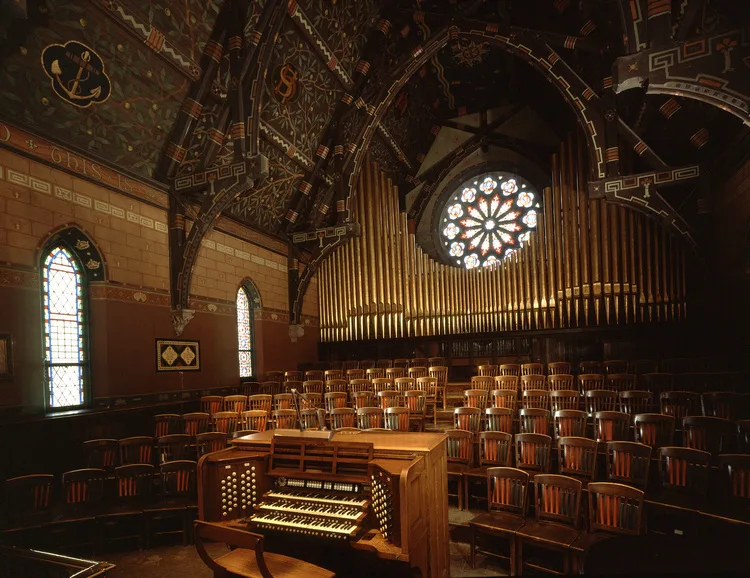 Midday Music for Organ: Guest organist Tim Pyper (CU Music)
Sage Chapel · Des Moines