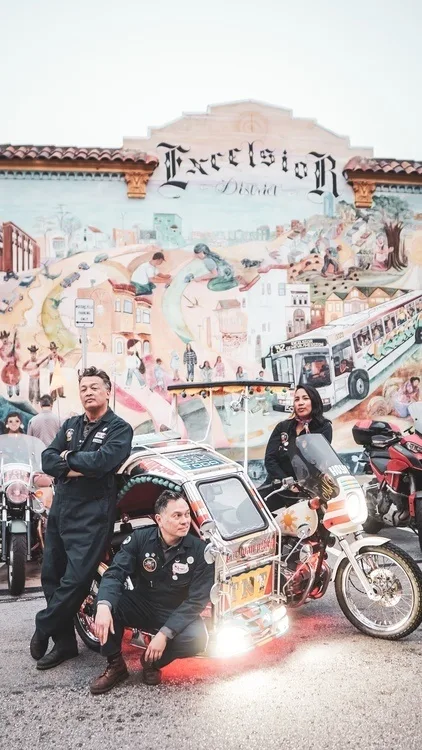
Three L.A.S.E.R. talks: Media Art, AI, The Self and Consciousness
Please park at 3165 Porter Dr (free)
The LASERs (Leonardo Art Science Evening Rendezvous) are an international program of evening gatherings that bring artists and scientists together for informal presentations and conversation with an audience. This evening, chaired by cultural historian Piero Scaruffi, will feature these talks:
- Liat Berdugo (Media Artist) on "Technologies of the Surface: Embodying the Gestural Interfaces of Everyday Technology"
- Julia Markel on "Which self does AI remember?"
- Vinod Menon (Professor of Psychiatry & Behavioral Sciences) on "The Default Mode Network, the Self, and Consciousness in the Age of AI"
Liat Berdugo is a multidisciplinary artist and writer whose work investigates the relationship between technology, visuality, politics, and power. She is an Associate Professor of Art + Architecture at the University of San Francisco. Her work has been exhibited in the USA, Europe and Australia. Her book, The Weaponized Camera in the Middle East, was published in 2021. Along with Emily Martinez, she is one half of the art collective, Anxious to Make, and is the co-founder of the Living Room Light Exchange, a monthly new media art series.
Julia Markel is currently a final-year PhD student in Computer Science at Stanford, advised by James Landay. Her research interests are in human-computer interaction with a focus on human-centered AI. She is currently working on projects that span philosophy of the self and AI, specifically investigating how we can leverage the notion of the plural self to design AI systems and understand their effects on individuals' self-concepts.
Vinod Menon is Professor of Psychiatry & Behavioral Sciences, Professor of Neurology & Neurological Sciences and Education, and director of the Stanford Cognitive and Systems Neuroscience Laboratory. He and his team were among the first to discover that the human brain is organized into specialized and interacting networks of brain regions, which has resulted in a paradigm shift in how we investigate human brain function and cognition.
Detailed bios at:
The Stanford LASERs are co-sponsored by the deans of Humanities and Sciences, Engineering and Medicine, and by Chemical Engineering.
Kilde: events.stanford.edu
Mere på The Hub at Stanford Research Park
Alle begivenheder på The Hub at Stanford Research Park
Begivenheder i nærheden
 World Diabetes Day Wellness Fair
Bass Promenade South and Spieker Plaza · Palo Alto
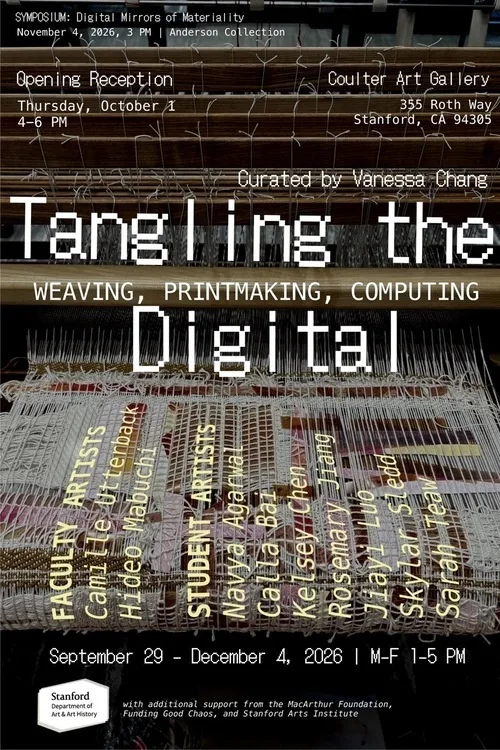 Tangling the Digital: Weaving, Printmaking, Computing
McMurtry Building · Palo Alto